Post-Purchase Email Sequence: The Easy Way to Get Repeat Sales

Summarize with


Last Updated:
You got the sale. But that is not the finish line. It is the start of the next opportunity.
Most stores go quiet after the order confirmation. That is a waste. The customer just raised their hand and said, “Yes, I trust you.” That moment is worth more than a polite receipt and a shrug.
If you want repeat sales without sounding pushy, a post-purchase email is one of the easiest ways to do it. And you can automate the whole thing inside your dashboard without turning your workflow into a circus.
Let’s break it down.
What is a Post-Purchase Email Sequence?
A post-purchase email sequence is a set of emails sent after a customer buys from you. It is not just a thank-you message. It is a planned follow-up that helps the customer get value from their purchase and gives your brand another chance to stay useful.
That sequence can include:
- order confirmation or thank-you emails
- setup or usage guidance
- product tips
- review requests
- cross-sell or repeat purchase suggestions
- customer retention emails
In simple terms, the sale does not end the conversation. It starts a new one.
Pro-Tip: Post-purchase email is a part of eCommerce email marketing. It will keep the relationship alive instead of letting it fade.
Why Post-Purchase Emails Matter for Repeat Sales
The first purchase is good. The second one is better.
That is where retention starts paying you back. A customer who has already bought from you is easier to re-engage than a brand-new lead. They know your brand, trust the process, and are more likely to buy again when the follow-up feels relevant.
Post-purchase emails matter because they help you:
- Reduce buyer regret by reassuring customers they made the right choice and setting clear expectations after checkout.
- Help customers use the product properly with setup guides, tutorials, tips, or next-step instructions that improve their experience.
- Increase trust after the sale through order updates, delivery communication, helpful check-ins, and accessible support.
- Encourage reviews and feedback while the experience is still fresh, making it easier to collect valuable social proof and insights.
- Create stronger brand recall by staying present after the purchase instead of disappearing once payment is complete.
- Open the door to repeat purchases by recommending relevant products, refills, upgrades, or complementary items at the right time.
- Improve customer satisfaction by solving common issues early before they turn into frustration or refund requests.
- Build long-term loyalty through consistent communication that feels useful rather than overly promotional.
- Lower refund chances by answering common concerns, clarifying usage, and reducing uncertainty after purchase.
- Boost lifetime value by turning one successful order into multiple future purchases over time.
- Reconnect inactive buyers with timely reminders, replenishment emails, or seasonal offers.
If you stop emailing right after the purchase, you miss one of the best moments to build trust and bring customers back again.
What a Strong Post-Purchase Sequence Should Include
A good post-purchase sequence does more than say thank you. It helps the customer succeed with the purchase they already made.
Here is the basic flow that works:
1. Order Confirmation or Thank-You Email: An order confirmation email or a thank-you email is the first touchpoint after purchase. It should reassure the customer, confirm the order, and set expectations.
2. Product Education or Setup Help: For a complex product, educating customers on how to use the product best is a great way to create a connection with the brand. The email should include the need to use, install, or understand what they bought; this is the time to help.
3. Tips, Reminders, or Social Proof: Social proof always strengthens customers’ trust in your service. Tips and reminders show them how to get the most out of the product.
4. Feedback Request Email: The feedback request email implies subtly that the brand cares about its customers. That trust can add to the customer journey more than anything.
5. Repeat Purchase or Cross-Sell Suggestion: After a product purchase, you can send a cross-sell or an upsell email. Suggest something related in your email. That could be an upgrade, an add-on, a refill, or a complementary product.
Pro-Tip: For more inspiration, you can check out this post-purchase email examples and automation ideas in this blog.
How Your Post-Purchase Sequence Flow Should Be?
A strong post-purchase sequence works best when emails follow the customer journey. Each message should arrive when it is most useful, not simply when your calendar says so. The goal is to guide the customer from purchase to satisfaction, then from satisfaction to the next sale.
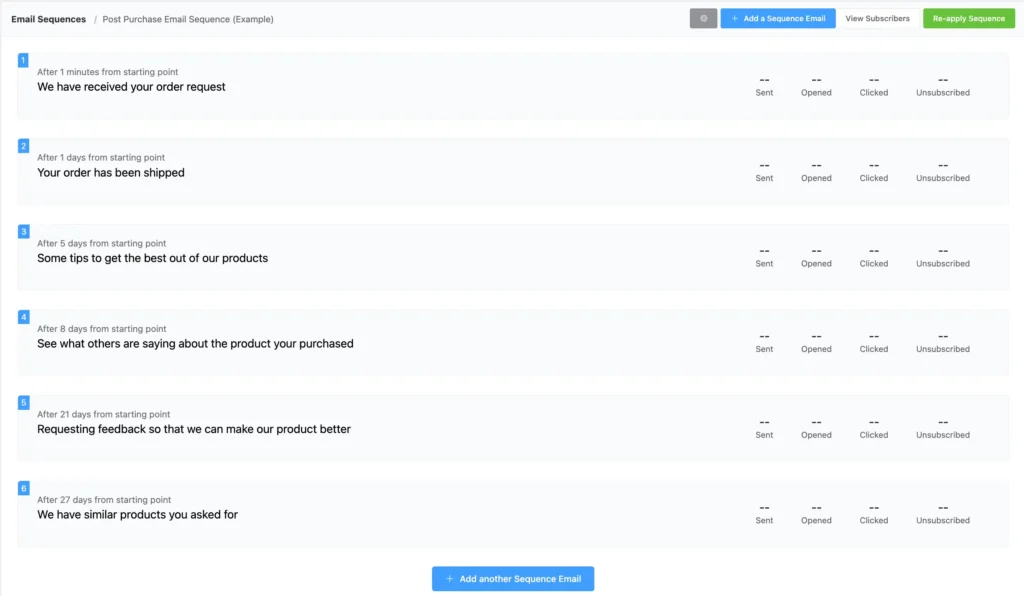
Recommended Flowchart:
Day 0 → Order Confirmation / Thank-You
Day 1–2 → Shipping Update or Access Details
Day 3–7 → Product Education / Setup Help
Day 7–14 → Tips, Reminders, or Social Proof
Day 14–21 → Feedback or Review Request
Day 21+ → Cross-Sell, Refill, or Repeat Purchase Offer
Now, why does this sequence work? It works because:
1. Day 0: Order Confirmation or Thank-You
Right after checkout, customers want reassurance. They need to know the payment was successful and the order is confirmed. This email reduces uncertainty and builds trust immediately.
2. Day 1–2: Shipping Update or Access Details
Once the order is being processed or delivered, customers expect progress updates. For digital products, this is where access instructions matter. Sending this early prevents confusion and support requests.
3. Day 3–7: Product Education or Setup Help
After receiving the product, customers need help getting started. This is the best time to send setup guides, tutorials, or first-use tips. It helps them experience value quickly.
4. Day 7–14: Tips, Reminders, or Social Proof
Once they have started using the product, deeper engagement becomes the goal. Share usage tips, feature highlights, or success stories that reinforce their buying decision.
5. Day 14–21: Feedback or Review Request
By now, the customer has had enough time to form an opinion. This makes it a strong moment to ask for a review, testimonial, or quick feedback without sounding rushed.
6. Day 21+: Cross-Sell, Refill, or Repeat Purchase Offer
Only after trust and value are established should you push the next sale through cross-sell email. At this stage, relevant recommendations feel helpful rather than aggressive.
Important Note: This timeline should adapt to your product type. A skincare refill may need a longer delay. A software upsell may happen sooner. The best sequence follows customer behavior, usage cycle, and buying intent.
A strong post-purchase flow does not chase customers. It supports them first, earns trust second, and sells again when the timing makes sense.
How to Set Up a Post-Purchase Sequence in FluentCRM
Setting it up is not complicated. It just needs a sensible structure. And you can get that structure with FluentCRM.
Here is how you can create a post-purchase email sequence with FluentCRM:
1. Set the trigger: Start with the event that should launch the automation.
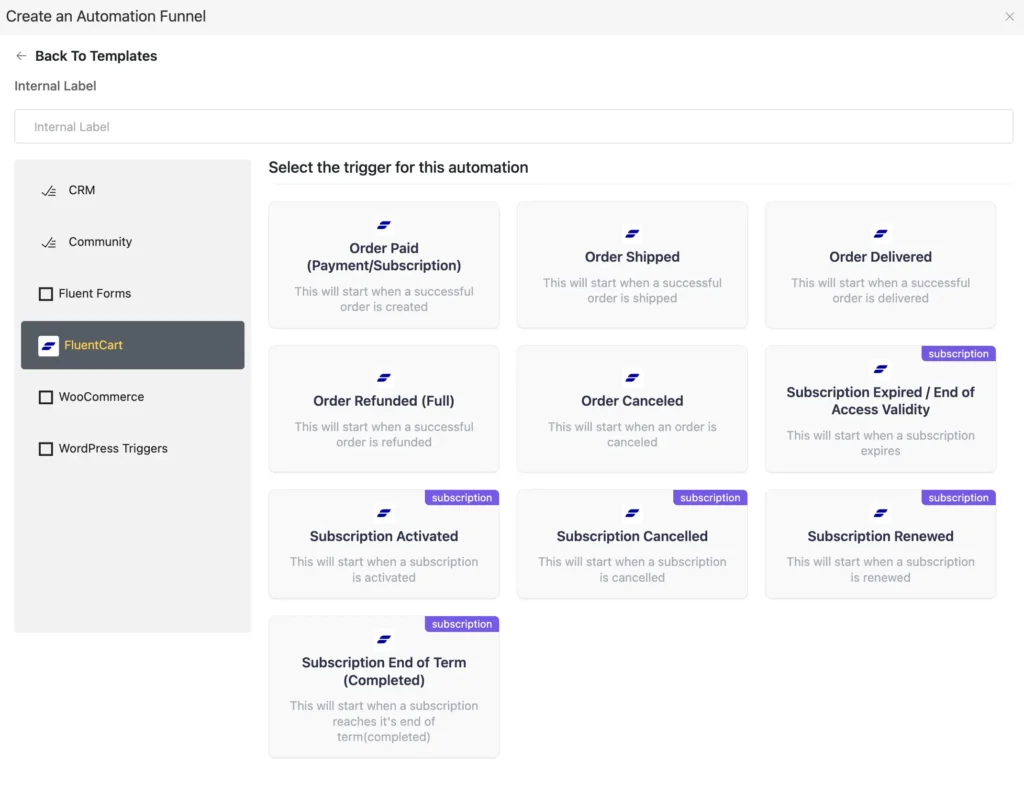
Common triggers include order completed, product purchased, subscription renewed, etc. Choose the trigger that matches your store logic, then continue into the editor and give the funnel a clear internal label.
2. Write the first email: Your first email should be simple. Confirm the purchase, thank the customer, and let them know what happens next.
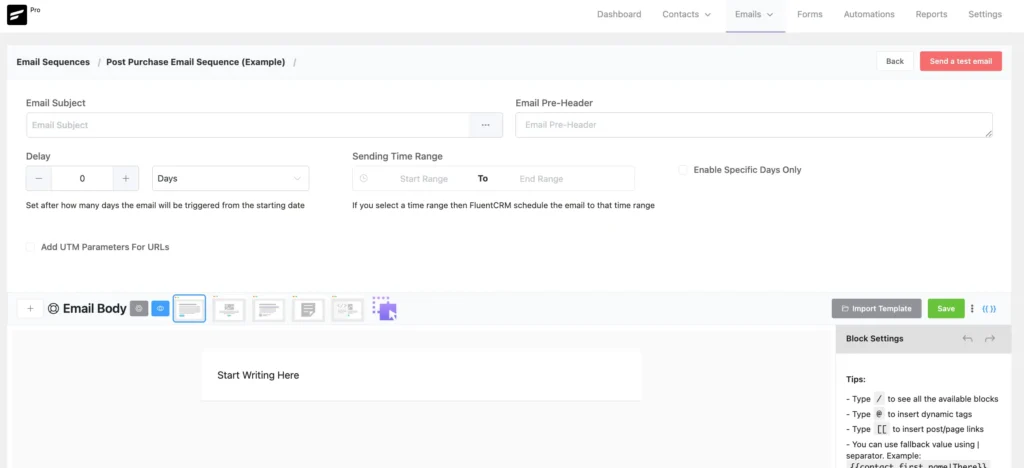
This email should not try to sell again immediately. It should make the customer feel good about the decision they just made.
3. Add a wait step: Do not rush into the next message. Give the customer time to receive, open, and use the product. A few days are usually enough for most products. Digital products can move faster. Physical products often need more time.
Step 4: Add the second email: Now you can help. This might be:
- a setup guide
- a product usage tip
- a short video
- a list of common questions
- a quick win for using the product well
This is where the sequence starts building trust.
5. Add review or feedback: Once the customer has had enough time, ask for a review or a reply.
That does two things:
- Gets you feedback that you can use for further betterment of your product
- Creates another engagement touchpoint before the next offer
6. Add the repeat sales step: Now the sequence can gently move toward the next purchase. That could be:
- a related product
- an upgrade
- a refill or replenishment
- a subscription offer
- a bundle or add-on

Pro-Tip: If you are running a subscription-based business, subscription renewal email examples fit naturally into your post-purchase email sequence. You can check it out for inspiration.
What Can You Write in Post-Purchase Emails
A strong post-purchase sequence is not trying to be clever. It is trying to be useful.
The best post-purchase emails succeed because they reduce uncertainty, guide the customer, and keep the relationship moving after the sale. Each message should have one clear purpose and arrive at the right moment.
- Keep it simple: Make the purpose of the email clear within seconds with one focused message and one next step.
- Do one job well: Use separate emails for confirmation, education, feedback, and offers instead of putting everything into one message.
- Be helpful first: Solve questions, explain setup, and remove friction before trying to sell again.
- Set clear expectations: Tell customers what happens next so they feel informed and confident after purchase.
- Sell gently: Introduce the next offer only after the first purchase has delivered value.
- Keep the tone human: Write like a real person speaking clearly, not an automated system pushing campaigns.
- Use smart timing: Match each email to the customer journey so the message feels relevant, not random.
- Make action easy: Use clear buttons, simple instructions, and low-friction next steps.
- Personalize where possible: Use purchase data, product type, or behavior to make follow-ups more relevant.
Good retention emails do not feel like automation. They feel like a brand that stayed helpful after getting paid.
Common Post-Purchase Email Sequence Mistakes to Avoid
A lot of post-purchase sequences fail for the same boring reasons.
- Becoming too promotional too fast before delivering value from the first purchase.
- Ignoring the product type and using the same sequence for every customer.
- Failing to stop or adjust emails after a repeat purchase happens.
- Asking for reviews before enough product experience has happened.
- Avoiding personalization based on behavior, category, or purchase history.
- Ignoring common concerns such as shipping, setup, usage, or returns.
- Using robotic language that feels automated and impersonal.
- Sending emails with no clear timing, sequence, or purpose.
- Neglecting mobile readability with cluttered layouts or weak calls to action.
- Failing to track performance and improve weak emails over time.
- Overusing discounts and training customers to wait for offers.
The customer has already bought. You do not need to act desperate. Knowing how eCommerce sales tracking can help you is a great advantage in planning your post-purchase email properly.
Where Post-Purchase Emails Fit into Retention Growth
Post-purchase email is not a standalone trick. It is one part of a larger customer retention system built to keep relationships active after the first sale.
It works alongside other essential flows such as:
- abandoned cart recovery
- customer retention emails
- win-back campaigns
- renewal reminders
- newsletter nurturing
When these systems work together, follow-up becomes smarter, more consistent, and far more profitable. This is where FluentCRM moves beyond being just an email campaign tool and becomes the engine behind your retention strategy.
The first purchase is not the finish line. It is the beginning of the relationship. A strong post-purchase sequence helps customers feel supported, builds trust after the sale, and gives them clear reasons to return. It keeps your brand memorable without feeling pushy or mechanical.
Set the trigger. Build the sequence. Keep it useful. Then let repeat sales happen the sensible way.
Samira Farzana
Once set out on literary voyages, I now explore the complexities of content creation. What remains constant? A fascination with unraveling the “why” and “how,” and a knack for finding joy in quiet exploration, with a book as my guide- But when it’s not a book, it’s films and anime.
Table of Content
Related Articles and Topics
-
How to Create a Newsletter Archive on WordPress within 5 Minutes!
You send a newsletter to your subscribers, once they reach their inboxes and read it…
-
New Gutenberg Editor: The Email Builder WordPress Users Always Wanted in FluentCRM
If you’re a WordPress user, isn’t it satisfying to write in Gutenberg? You click the…