SMS Compliance 101: How to Protect Your Brand and Build Trust

Summarize with


Last Updated:
One of the biggest pitfalls for brands expanding into SMS is assuming their existing marketing infrastructure is sufficient. If you’re already sending successful email campaigns, it’s easy to think, “We already have a database of subscribers, let’s just start texting them.”
Don’t.
For a brand that already sends marketing emails, the SMS side is not automatic. Email subscribers do not count as SMS opt-ins. You need separate, explicit consent before sending a single promotional text. Not to mention, you must follow sms compliance rules.
So, let’s dive into this blog to know all about sms compliance and how to apply it to your brand.
What is SMS Compliance?
SMS compliance is the practice of adhering to a set of legal and industry-standard guidelines designed to regulate business text messaging. At its core, it is about respecting the recipient’s privacy and ensuring that businesses communicate responsibly.
The legal frameworks governing the two channels (SMS and Email) are fundamentally different. Promotional email is governed by CAN-SPAM, which often allows commercial email without prior opt-in (provided you include clear opt-out mechanisms and identity). In contrast, promotional SMS is primarily governed by TCPA-style consent rules, which are significantly stricter.
A brand can be perfectly compliant in email and yet face massive liability in SMS if it attempts to reuse its email list without a fresh, text-specific opt-in.
The Fundamental Shift: Email vs. SMS Compliance
To help you distinguish between your current email habits and the requirements for your new SMS channel, keep this comparison in mind:
| Feature | Email (CAN-SPAM) | SMS (TCPA/Carrier Standards) |
| Prior Consent | Often not required for commercial mail | Strictly required (Prior express written consent) |
| List Reuse | Generally permitted for existing leads | Prohibited (Email list ≠ SMS list) |
| Opt-Out | Working unsubscribe link required | Mandatory “STOP” keyword functionality |
| Identification | Truthful headers/subject lines | Clear, identifiable brand name in every text |
| Legal Focus | Truthfulness and ability to opt out | Prior consent and rigid disclosure |
Recent FCC guidance has further emphasized that “one seller at a time” consent is the expectation for covered marketing texts. This means consent must be tied to the specific brand sending the message, not a broad, shared opt-in across multiple entities.
The Golden Rules for Your Signup Flow:
- Separate Consent: Always use a standalone SMS opt-in field.
- Clear Disclosure: Place a disclosure directly next to the phone-number field and link it to your privacy policy.
- Explicit Language: Your customers must know exactly what they are signing up for.
Recommended Disclosure Language: When building your signup forms, use clear, transparent language. A basic, compliant-style disclosure should read:
“By providing your number, you agree to receive recurring promotional text messages from [Brand]. Consent is not a condition of purchase. Msg frequency varies. Msg and data rates may apply. Reply STOP to opt out.”
Why SMS Compliance Matters More Than Ever
Let’s be direct about this. TCPA fines start at $500 per message, jumping to $1,500 for willful violations. In 2025 alone, TCPA settlements exceeded $150 million, with many targeting e-commerce and marketing platforms for violations.
But the financial risk is only part of the story. In 2026, U.S. wireless carriers can suspend or deactivate non-compliant messaging campaigns without warning. One compliance misstep, and your entire SMS channel goes dark. No warning. No second chances. Just silence.
More importantly, compliance isn’t just about avoiding penalties. It’s about respect. When someone gives you permission to text them, they’re trusting you with one of their most personal communication channels. Honoring that trust means following the rules that protect their privacy and their inbox.
The Core SMS Compliance Laws You Need to Understand
SMS compliance in 2026 operates under three overlapping frameworks. You need all three working together.
TCPA: The Federal Foundation
The Telephone Consumer Protection Act is the federal law requiring consent before you text anyone for marketing purposes. It’s also one of the most litigated statutes in U.S. law, which tells you everything you need to know about how seriously it’s enforced.
The core requirement is simple: express written consent must precede every promotional SMS. Implied consent doesn’t count. You need clear, documented, written permission before you send a single marketing text.
Here’s what that consent needs to include:
- A clear statement that the person agrees to receive automated marketing texts
- The specific phone number they’re consenting to receive messages at
- Information about message frequency
- Disclosure that message and data rates may apply
- An easy way to opt out at any time
One important update: The FCC attempted to implement a one-to-one consent rule that would have required separate consent for each business. As of 2026, one-to-one consent is no longer a requirement after the 11th Circuit Court of Appeals threw it out in January 2025. A single opt-in can cover multiple sellers under TCPA, as long as the consent is clear and express.
But don’t mistake this for loosened rules. The consent requirements themselves haven’t changed. You still need explicit, documented permission.
CTIA: The Carrier Rules
CTIA represents the industry rules that carriers enforce. These aren’t laws in the traditional sense, but they directly control whether your messages actually get delivered.
CTIA guidelines include requirements for:
- Clear sender identification in every message
- Working STOP and HELP keywords
- Prohibited content categories (what they call SHAFT: Sex, Hate, Alcohol, Firearms, Tobacco)
- Message volume limits based on your registration tier
Violate CTIA rules, and carriers don’t wait for a court. They filter your messages immediately.
10DLC: The Registration System
10DLC is the registration system that lets your number send business texts. Think of it as the verification layer that proves you’re a legitimate business with proper consent processes.
As of 2026, 10DLC registration is not optional. If you’re sending business texts from a standard 10-digit phone number in the United States, you must be registered. US carriers now block unregistered traffic entirely.
The registration process has two parts:
- Brand registration: You register your business with information that matches your legal records (business name, EIN, business type)
- Campaign registration: You register each specific type of messaging campaign you’ll run, including your consent collection methods and sample messages
FluentCRM’s SMS integration supports both Twilio and Amazon SNS, which handle the carrier registration requirements on the backend. When you set up your SMS provider inside FluentCRM Settings, you’re connecting to a system that’s already built to handle these compliance layers.
International Considerations: GDPR and Beyond
If you’re texting contacts in the European Union, you’re dealing with an additional compliance layer. GDPR requires explicit, documented consent for SMS marketing to EU residents, and the penalties are severe: up to €20 million or 4% of global annual revenue, whichever is higher.
GDPR consent requirements are stricter than TCPA:
- Consent must be freely given, specific, informed, and unambiguous
- Pre-ticked boxes don’t satisfy GDPR requirements
- Withdrawing consent must be as easy as giving it
- You need to maintain detailed records proving when, where, and how each person consented
For EU SMS marketing, consent needs to be obtained for each specific purpose using separate fields, meaning SMS and email consent should be collected independently.
Canada operates under CASL (Canadian Anti-Spam Legislation), which functions similarly to TCPA with its own specific requirements around consent and identification.
The key principle across all jurisdictions: explicit, documented consent before you send.
How to Build a Contact List that is SMS Compliant
This is where theory meets practice. You can’t just import phone numbers and start texting. Here’s how to build your SMS subscriber list the right way.
1. Design Clear Opt-In Processes
Your opt-in mechanism needs to be obvious and explicit. This typically happens through:
- Web forms: Using Fluent Forms with a dedicated phone field and SMS consent checkbox works perfectly for this. The checkbox should clearly state what the person is agreeing to receive.
- Text-to-join keywords: Someone texts a keyword like “JOIN” or “SAVE20” to your number, and you send back a confirmation message that includes opt-in language.
- Point of sale: During checkout or in-store, with clear disclosure about what they’re signing up for.
The critical element: make it completely clear what they’re agreeing to. “Sign up for updates” isn’t specific enough. “Receive promotional texts about sales and new products” is better.
2. Document Everything
Documented consent records are your legal defense. For every subscriber, you need to maintain:
- The exact date and time they opted in
- The method they used to opt in (web form, keyword, etc.)
- The specific consent language they agreed to
- Their phone number and any other identifying information
FluentCRM automatically stores this information when contacts opt in through your integrated forms. The consent timestamp and method become part of the contact record, creating an audit trail that satisfies compliance requirements.
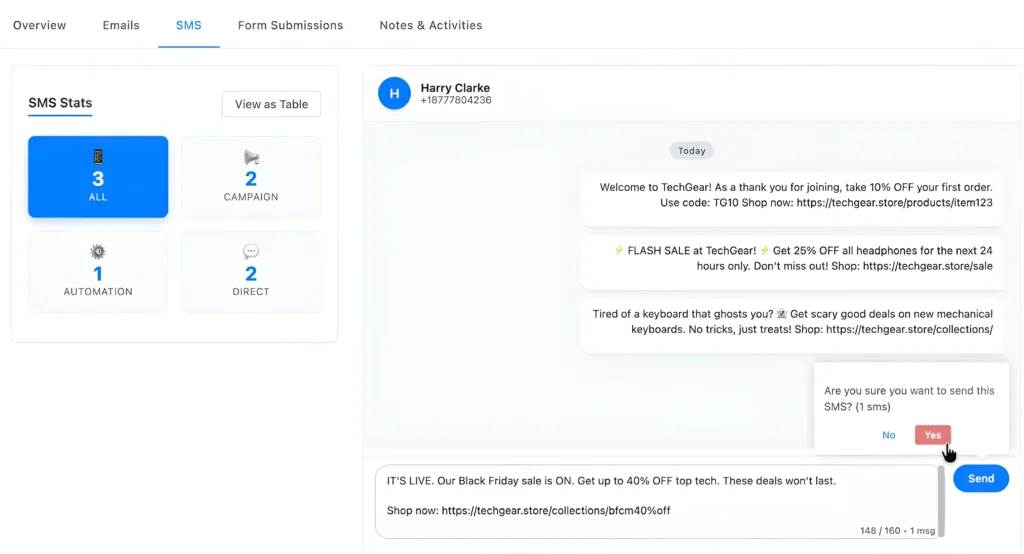
When you’re looking at a contact inside FluentCRM, you can see their full SMS history, including when they subscribed and every message exchange. That visibility isn’t just convenient—it’s a compliance requirement.
3. Separate Lists for Different Purposes
Here’s something that trips up a lot of businesses: promotional consent and transactional consent are different things.
If someone bought a product from you, you can send them transactional messages about that purchase (order confirmations, shipping updates) without explicit SMS marketing consent. But you cannot use that transaction as implied consent to send them promotional texts.
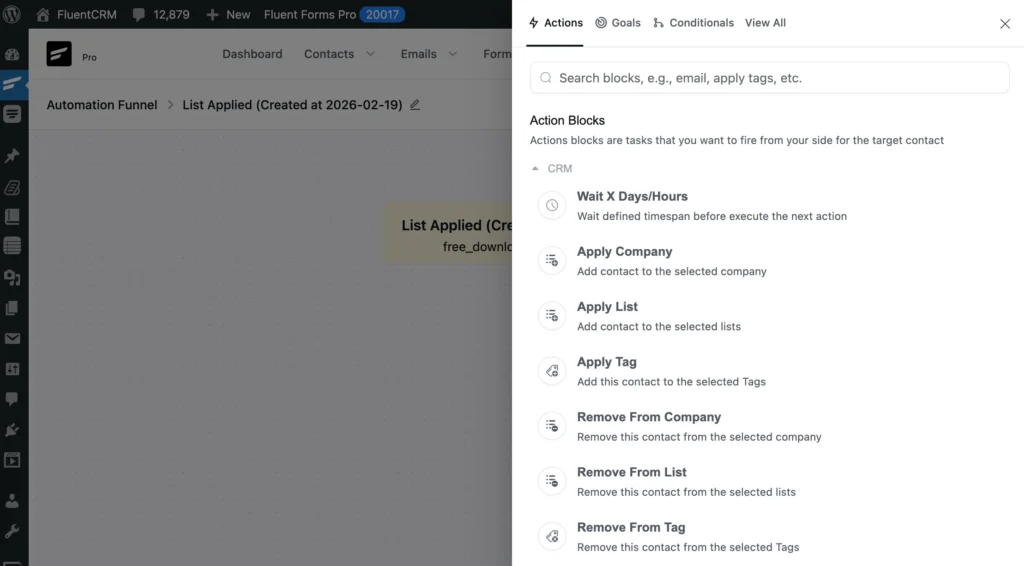
FluentCRM’s tagging and segmentation system handles this naturally. You can maintain separate tags for “SMS Marketing Consent” versus “Customer – SMS Transactional OK” and ensure your campaigns only target the right groups./
What Should be Your SMS Content and Sending Rules
Getting consent is step one. Staying compliant after that requires following specific rules about what you send and when you send it.
Required Elements in Every Message
Every marketing message must include a simple way to opt out. The standard is replying “STOP” to unsubscribe. Your first message to a new subscriber should also identify your business clearly and confirm what they’ve signed up for.
Example first message: “Welcome to [Business Name] text alerts! Get exclusive deals and updates. Reply STOP to unsubscribe, HELP for support. Msg&data rates may apply.”
After that, every promotional message should include your business name and maintain a natural connection to what they signed up for.
Timing Restrictions
TCPA restricts communication to 8 AM to 9 PM local time. This applies to the recipient’s timezone, not yours. If you’re running a national campaign across multiple time zones, you need to account for this in your scheduling.
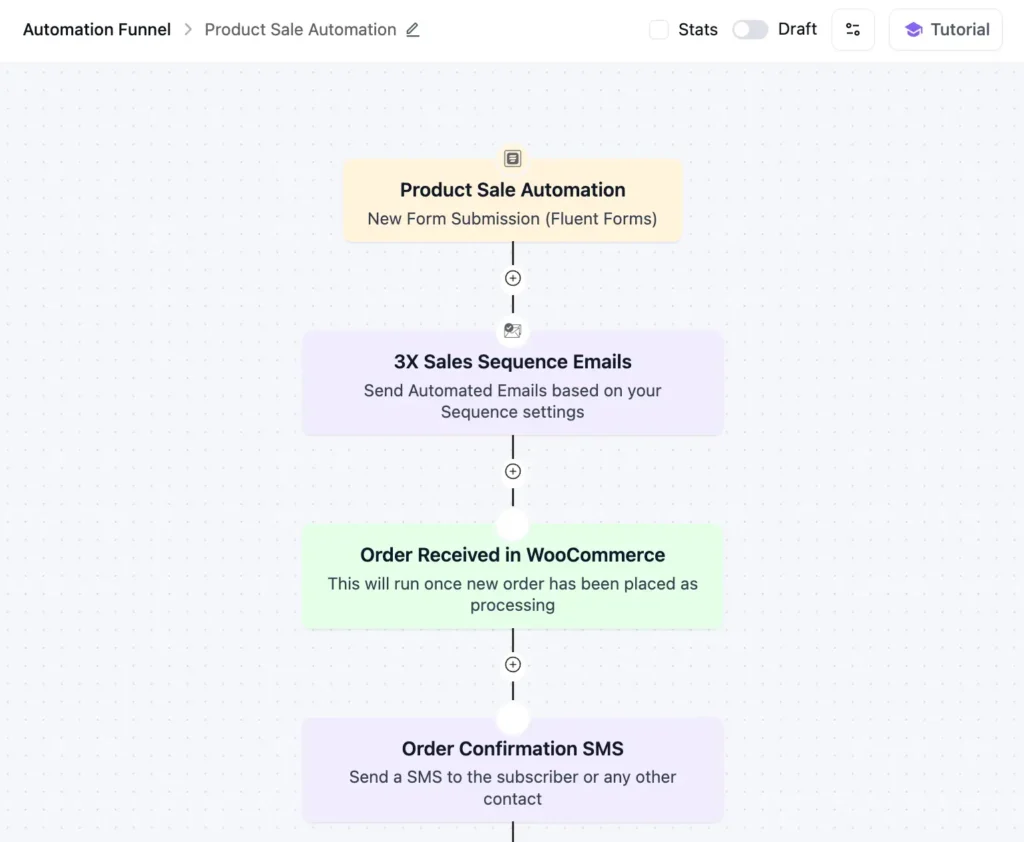
FluentCRM’s SMS automation system lets you set specific send times for campaigns and sequences. When you’re scheduling a bulk SMS campaign or building an automation sequence, you can configure delivery windows that respect quiet hours automatically.
Frequency Management
In 2026, brands can send only one SMS per cart abandonment event, sent within 24 hours of the event, and not follow up with additional abandonment texts. The new compliance rules specify a maximum of three SMS messages per day across all campaigns and automations combined.
When you’re building automations inside FluentCRM, this means thinking strategically about your message hierarchy. If someone has three potential triggers that could fire on the same day (welcome sequence, abandoned cart, flash sale), you need logic that prioritizes which message matters most.
The SHAFT Content Rules
CTIA prohibits specific content categories in SMS marketing:
- Sex: Adult content or sexual services
- Hate: Content that promotes hatred or discrimination
- Alcohol: Marketing alcohol products
- Firearms: Marketing guns or weapons
- Tobacco: Marketing tobacco, vaping, or cannabis products
Even if you have proper consent, carriers will filter or block messages containing this content. For most businesses running standard promotional campaigns, this isn’t an issue.
But if your business operates in any of these categories, SMS marketing comes with additional restrictions or may not be viable at all.
Managing Opt-Outs Properly
Someone texting “STOP” to your number isn’t just feedback. It’s a legal requirement you must honor immediately.
You must process opt-outs within 10 business days as required by TCPA, though best practice is to process them instantly. Re-subscribing contacts who opted out without their renewed explicit consent is prohibited.
Here’s what has to happen when someone opts out:
- Send them a single confirmation message acknowledging the opt-out
- Immediately suppress their number from all future marketing sends
- Keep the record in your system showing they opted out (for compliance documentation)
- Never text them again unless they explicitly re-opt-in through a proper consent process
If someone opts out of your marketing broadcasts but their number is still active in a CRM workflow that fires follow-up texts, you’re still violating TCPA. Opt-outs have to apply everywhere in your system.
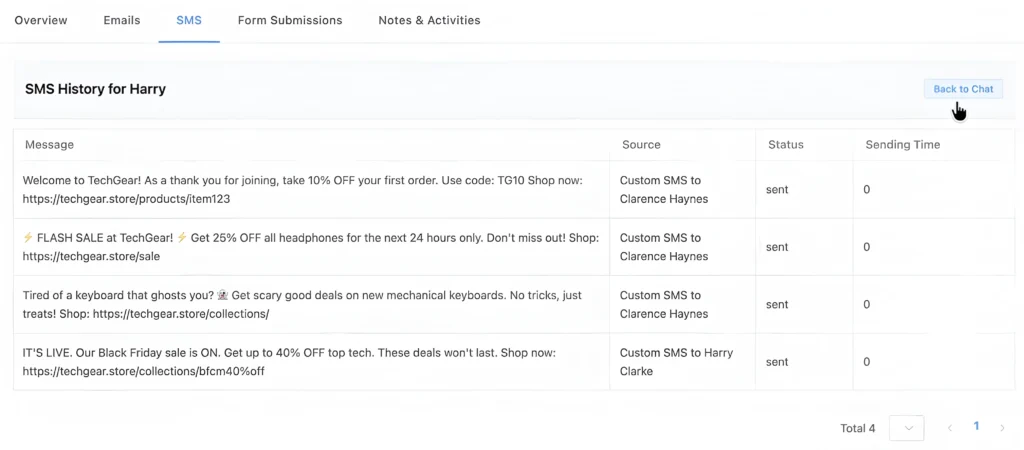
You can also set up a dedicated automation that triggers when someone replies with STOP, sending the confirmation message and updating their tags or lists accordingly.
Using AI to Maintain SMS Compliance at Scale
Here’s where things get interesting. As your SMS program grows, manual compliance management becomes impossible. You can’t personally review every contact record to verify they have proper consent. But with AI, you can get a gist of what you need to know instantly.
Here’s how to implement them:
1. AI Contact Summaries
When you need to quickly understand a contact’s full history, including their consent status, message engagement, and interaction patterns, FluentCRM’s AI contact summary pulls together everything in one readable snapshot.
Click the AI summary button on any contact profile, and you get instant clarity on:
- When and how they opted into SMS
- Their engagement history with your messages
- Any opt-outs or preference changes
- Tags and segments they belong to
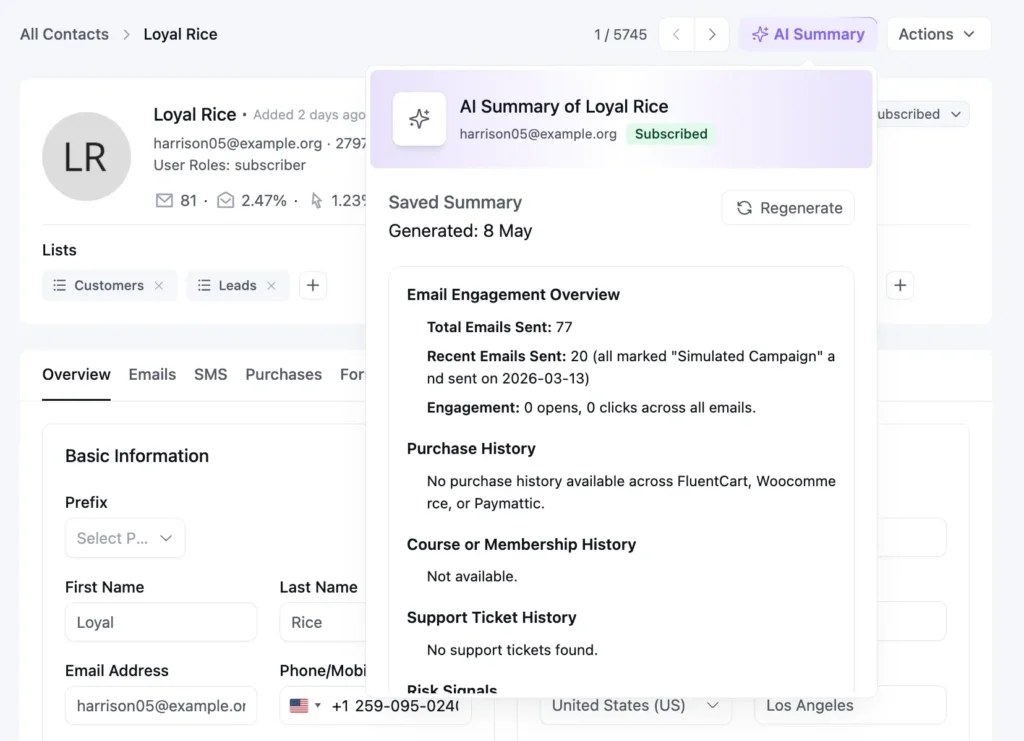
This isn’t about marketing optimization. It’s about compliance verification at scale. When you’re auditing your SMS program or responding to a consent inquiry, you need this information instantly. The AI summary delivers it in seconds instead of requiring you to piece together multiple data points manually.
2. MCP-Powered Workflow Intelligence
FluentCRM 3.0 introduced 25 MCP (Model Context Protocol) tools designed to help AI interact intelligently with your CRM workflows. For compliance purposes, this creates some powerful capabilities:
- Quickly identify contacts without documented SMS consent
- Surface automation conflicts, where someone might receive too many messages
- Generate compliance reports showing consent collection methods and dates
- Flag contacts whose consent documentation is incomplete or unclear
These aren’t theoretical features. They’re practical tools that help you maintain compliance as your contact database grows from hundreds to thousands to tens of thousands of records.
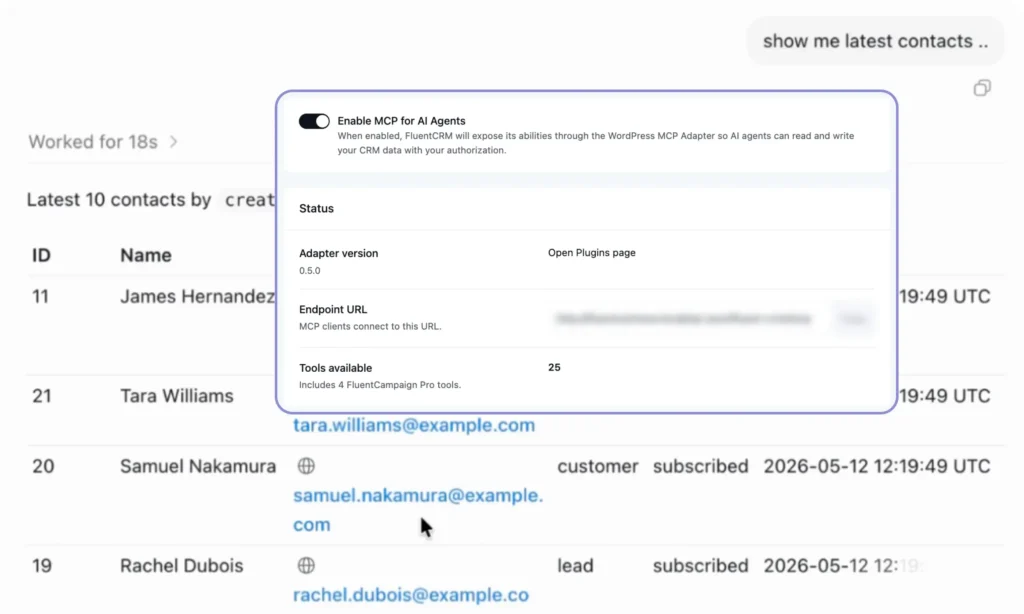
The MCP integration means you can ask natural language questions like “Show me contacts who received SMS in the last 30 days but don’t have a documented opt-in timestamp” and get actionable answers instead of manually building complex filters.
What Happens When You Get It Wrong
Understanding the penalties helps clarify why this matters so much.
- Financial penalties: TCPA violations carry fines of $500 to $1,500 per message. If you send a bulk campaign to 1,000 people without proper consent, you’re potentially looking at $500,000 to $1.5 million in liability. These aren’t theoretical penalties. They’re enforced through class action lawsuits that happen regularly.
- Carrier blocking: Carriers now block unregistered traffic entirely, and they can suspend your number for content violations without warning. Once you’re flagged, getting reinstated is difficult and time-consuming.
- Reputation damage: When word spreads that your business spammed people or violated their trust by texting without permission, that damage is permanent. Customer relationships that took years to build can evaporate overnight.
- Operational disruption: If your SMS channel gets shut down mid-campaign, you don’t just lose that campaign. You lose the entire communication channel until you remediate the issue, which could take weeks or months.
The stakes are high enough that treating compliance as an afterthought isn’t viable.
TLDR of Practical Compliance Checklist
Here’s what actual compliance looks like in practice. Before you send anything, check if these are done correctly:
- SMS provider is properly configured in FluentCRM Settings with valid credentials
- 10DLC registration completed through your provider (Twilio or Amazon SNS)
- Opt-in forms designed with clear, specific consent language
- Consent documentation system in place (FluentCRM stores this automatically)
- Welcome message drafted with required disclosures
- Recipient list limited to contacts with documented SMS consent
- The message includes the sender identification
- STOP keyword functionality verified
- Send time within 8 AM – 9 PM recipient local time
- Daily message limit respected (maximum 3 per contact)
- Content complies with SHAFT restrictions
Pro-Tip: FluentCRM offers an organized, concrete system that revolves around SMS. So, if ticking all the boxes feels tedious, you can send sms with FluentCRM.
Building Compliance Into Your Workflow
The real answer to SMS compliance isn’t a checklist you run through once. It’s building compliant practices into your daily workflow so they happen automatically.
1. Use segmentation properly. Create clear tags and lists that distinguish between “SMS Consent – Marketing” and other contact types. Build your campaigns and automations to target only those properly consented segments.
2. Leverage automation for consistency. Set up automated welcome sequences that send the required first message disclosure every time. Create automation rules that apply tags when someone opts in through different channels, maintaining a clean audit trail.
3. Document your processes. Write down your consent collection methods, your opt-out handling procedure, and your message frequency guidelines. Train anyone on your team who touches SMS campaigns on these processes.
4. Review regularly. Set a quarterly calendar reminder to audit your SMS program. Check that consent documentation is complete, review your automation sequences for any conflicts, and verify your opt-out processing is working correctly.
5. Use the AI tools. The contact summary and MCP features in FluentCRM 3.0 aren’t just nice-to-haves. They’re compliance tools that help you maintain visibility and control as you scale.
SMS Compliance as a Competitive Advantage
SMS compliance isn’t a legal hurdle to clear; it’s the price of admission for your most intimate marketing channel.
True compliance is an act of intentionality. It isn’t found in legal jargon or a one-time checklist—it is built into the way you collect consent, the respect you show for your subscribers’ boundaries, and the value you deliver to their pocket. When you shift your mindset from “avoiding fines” to “earning trust,” you stop viewing compliance as a burden and start using it as your strongest competitive advantage.
Compliance is no longer optional—it is the baseline for showing up.
Samira Farzana
Once set out on literary voyages, I now explore the complexities of content creation. What remains constant? A fascination with unraveling the “why” and “how,” and a knack for finding joy in quiet exploration, with a book as my guide- But when it’s not a book, it’s films and anime.
Table of Content
Related Articles and Topics
-
5 Best Design Tools in 2026 for Designers, Marketers, and Creative Teams
Every design tool wants to be the one app you never leave, and none of…
-
How to Drive More Engagement with WhatsApp Marketing Inside WordPress
You might be sending emails to your contacts regularly. It might be: All of them…