


12 Black Friday Marketing Strategies for Small Businesses (That Don’t Depend on Bigger Discounts)

Summarize with


Last Updated:
Every year, the big retailers open Black Friday with discounts that most small businesses simply can’t match, whether it’s 50% off sitewide, free next-day shipping on everything, or a doorbuster price that only works because they buy stock by the container.
Trust me, trying to beat them on price is the fastest way to have a busy weekend and a still have a bad month.
The good news is, the 2025 season showed discount size isn’t what decides who wins. Shoppers spent a record $11.8 billion online in the US on Black Friday alone, and the stores that did well were the ones that planned early, looked after the customers they already had, and made buying easy on a phone.
And guess what?
Every one of those things is within reach of a small team.
Below are twelve Black Friday marketing strategies built for small and online businesses, grouped into what to do before, during and after the sale, along with a prep checklist, advertising tips for small budgets and answers to the questions owners ask most.
Get the AI-powered email marketing and automation inside WordPress. Turn leads into customers, automate user journeys and grow repeat sales, with 45+ plugin integrations and no price hikes as you scale. Valid until December 4.
Why Black Friday Still Matters for Small Businesses
Black Friday isn’t just any Friday. It’s the Friday after Thanksgiving when shoppers are ready to grab the best deals of the year, and the latest retail statistics show just how high the stakes have become this year.

- Adobe recorded $11.8 billion in US online spending on Black Friday 2025, up 9.1% on the year before, and $44.2 billion across Cyber Week from Thanksgiving to Cyber Monday.
- Independent stores shared in that growth too. Shopify reported that more than 94,900 of its merchants had their highest-selling day ever over the 2025 Black Friday weekend.
- The more useful finding for a small business is how that money was won. Klaviyo’s 2025 recap found that brands set records even as average discount rates fell, and that revenue from repeat buyers grew faster than revenue from new ones.
That means a store with a loyal email list and a well-planned offer can compete without matching the biggest discounts in the market. Here’s the deal:
- It’s the perfect chance to clear out old inventory
- You’ll attract new customers who might stick around long after the sale
- Perfect time to build lasting brand loyalty
- High conversion rates are driven by urgency and limited-time offers
- It’s a great time to grow your email list and social media following
- Plus, it gives your website traffic and SEO rankings a serious boost
- And don’t forget the golden opportunity for upselling and cross-selling
In short, Black Friday is the perfect opportunity to set your business up for long-term success.
How to Prepare Your Business for Black Friday
Black Friday 2026 falls on Friday, November 27, the day after US Thanksgiving, and Cyber Monday follows on November 30. Work back from those dates.
| When | What to get done |
|---|---|
| 6 to 8 weeks before (early October) | Set your target, choose your offer, and check you have enough stock or capacity |
| 4 weeks before | Build or refresh your deal page, write your email sequence and grow your list with an early-access sign-up |
| 2 weeks before | Test checkout on mobile with the coupon applied, schedule your emails and prepare social posts and ads |
| 1 to 2 weeks before | Send your teaser and open early access for subscribers |
| Black Friday to Cyber Monday | Run the sale, watch stock and support, and send reminders only to people who haven’t bought |
| The week after | Thank new customers, ask for reviews and start your post-sale follow-up |
12 Black Friday Marketing Strategies for Small Businesses
Black Friday isn’t just about slashing prices; it’s about smart strategies that drive results. Whether you’re a local shop or a global brand, these marketing tactics are your blueprint to stand out, connect with shoppers and improve your sales.
Let’s cut to the chase and get started!
Before the Sale
Most of what decides your Black Friday happens in the weeks before it starts, when you still have time to choose an offer you can afford, grow your list and fix the problems that would cost you orders on the day. The below five strategies cover the planning and setup work, so when the sale opens, you’re running it rather than scrambling to build it.
1. Set a Target and Work Backwards from it
Before jumping into your Black Friday marketing, it’s important to set clear goals that guide your efforts. Think of it like mapping out a plan, knowing exactly what you want to achieve will help you focus and make smarter choices.
Pick one number that defines a good Black Friday for you, such as revenue, new customers or email subscribers, and then work out what it takes to hit it. If your goal is 200 orders and your site converts at 2%, you need about 10,000 visits, which tells you how hard your email, social and ad plan has to work and whether the target is realistic in the first place.
Here’s why defining your goal is essential and how it shapes your strategy:
- Decide if your focus is boosting sales, increasing brand awareness, building loyalty, or clearing out inventory
- Set measurable goals, such as increasing sales by 20% or gaining 1,000 new subscribers, to track success
- Your goal shapes your tone, whether it’s creating urgency for quick sales or nurturing long-term relationships
A clear target also tells you when to stop. If you hit it by Saturday, you can protect your margin instead of adding a deeper discount on Monday out of habit.
2. Build an Offer That Doesn’t Depend on the Biggest Discount
Small businesses rarely win a price war with large retailers. So design an offer that makes your product easier to say yes to without cutting the price to the bone.
Bundles let you discount the package while keeping each product’s price intact, a free gift with orders above a set amount raises the average order, and tiered offers such as 15% off one item and 25% off three reward bigger baskets.
Put your best-selling product at the center of the offer, because people already want it and it needs the least persuasion. Then explain what makes it worth buying, using reviews, a short demo or a clear comparison, so the discount isn’t the only reason to act.
3. Tease the Sale Early and Build an Early-Access List
“The early bird catches the worm” is especially true when it comes to Black Friday; timing is everything. While there’s no actual race, starting early can give you a huge advantage.
Start talking about your sale one to two weeks before it opens, and give people a reason to sign up in advance, such as early access, first pick of limited stock or a subscriber-only bonus. An early-access list does two jobs at once, because it grows your email list and it spreads your sales over more days than the Black Friday weekend.
Early access works for brands of every size. Klaviyo reports that one brand’s single VIP early-access email drove 400% more revenue during BFCM 2025.
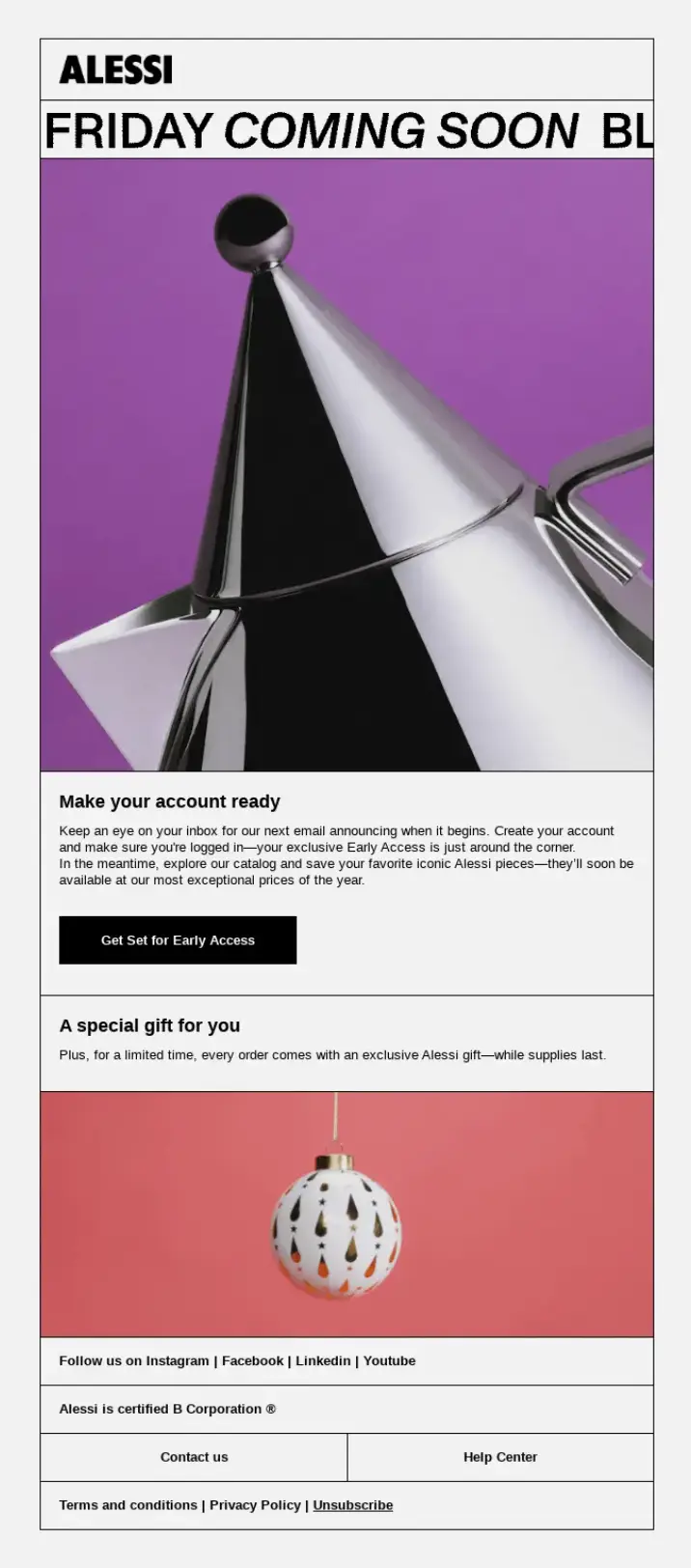
Here’s why getting ahead of the game works:
- You build momentum and excitement around your offers
- It gives you extra time to fine-tune your message and strategy
- You can gather valuable feedback from your audience and adapt as needed
- Starting early can create a sense of anticipation
- It builds trust with customers who know you’re prepared
Since Black Friday falls on the last Friday of November (29 November this year), aim to make your presence felt by October. Start sending out black friday email campaigns and teasing promotions early to maximize your impact.
4. Make Your Site Fast, Mobile-First and Easy to Scan
Most of your Black Friday shoppers will be on a phone. And if your site doesn’t work seamlessly on mobile, you’re basically telling them to shop somewhere else.
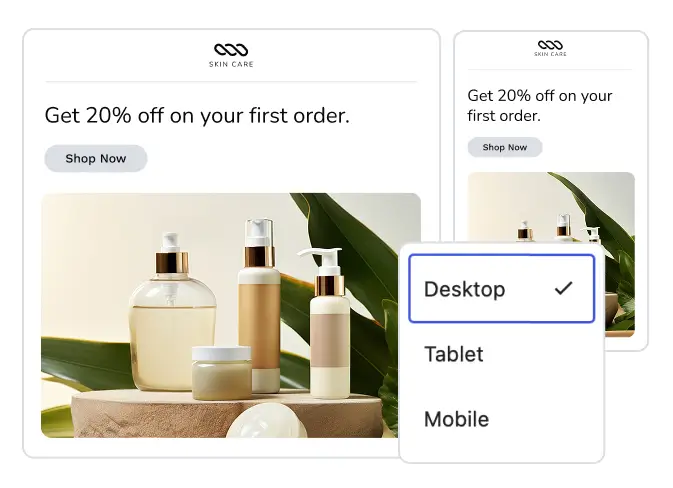
Adobe found that 55.2% of US online Black Friday sales in 2025 came from mobile devices, and Salesforce found that mobile devices drove 70% of global online orders across Cyber Week.
Before the sale, run through your own checkout on a phone from product page to payment confirmation. here’s how to mobile-optimize your site to skyrocket your revenue in this deal season:
- Compress large images
- Remove pop-ups that cover the add-to-cart button
- Show the deal and its end date at the top of the page
- keep product pages scannable with short benefit lines, clear prices and one obvious button
- Use big buttons and a simple menu that’s easy to touch and navigate
- Set up a one-page checkout with easy-to-fill forms; add options like Apple Pay for fast payments
- Check that your site works well on different mobile devices and screen sizes
- Keep text clear and images sharp; avoid anything that slows down your site
If you’re expecting a high volume of visits this Black Friday, consider switching to VPS hosting so your site performance is quick and reliable. Your emails need the same care too, since most of them will be opened on a phone too. So check them against our list of mobile-optimized email dos and don’ts.
5. Segment Your List So Customers and Leads Get Different Offers
Companies can generate as much as 40% more revenue from personalization- McKinsey
Your existing customers and your new leads don’t need the same email. Customers already trust you, so they respond to early access, an upgrade or a loyalty bonus, while leads usually need more proof and a clearer first-purchase offer. Even a simple split into customers, leads and VIPs makes your emails more relevant.
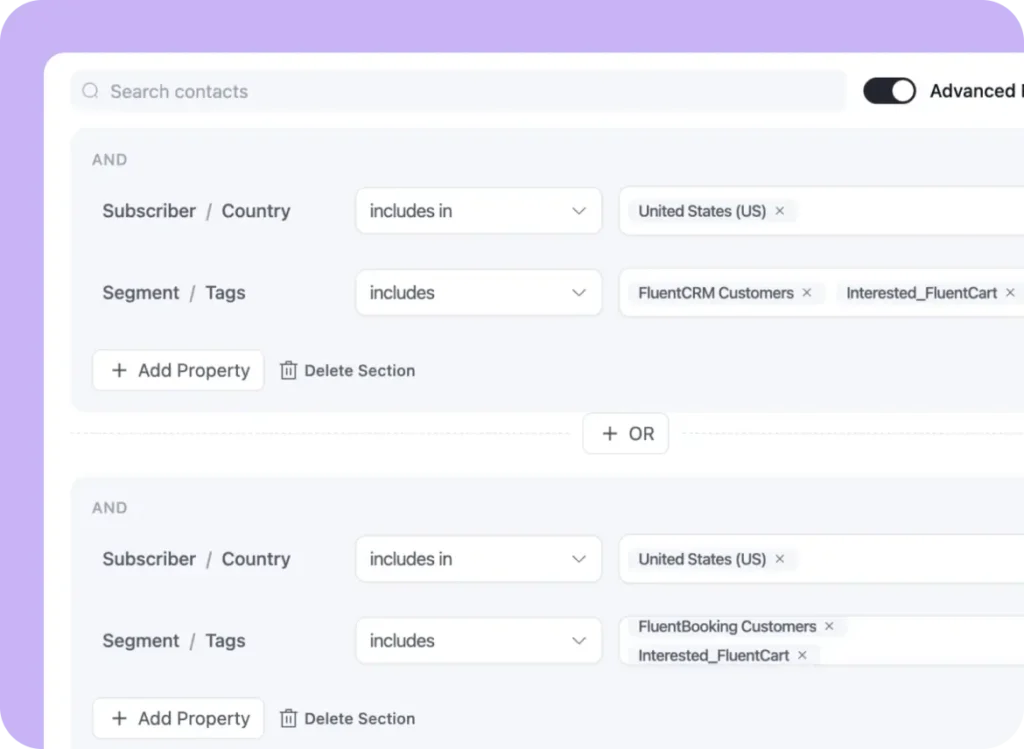
The more tailored your offers, the better your results. Here’s how you can start personalizing recommendations in a simple, effective way:
- Use data to understand what your customers like
- Segment your audience based on behaviors or preferences
- Offer product suggestions based on past purchases
- Use geographic segmentation recommendations for targeted offers
- Leverage customer feedback to improve recommendations
- A/B test different approaches to find what works best
When you focus on personalizing the experience, you’re not just selling a product; you’re meeting their needs exactly how they want you to. Our guide to the types of segmentation in marketing covers many ways you can group your list. If you have purchase history, you can go further and recommend products that go with what each customer already bought, which feels more personal than another sitewide banner. For more ways to do this, you can also check our guide to email personalization.
During the Sale
Once the sale is live, your job shifts from building to keeping attention and turning it into orders, which is harder than it sounds when every inbox and feed is full of competing deals. Below are five strategies help you stay visible to the right people, give them a real reason to decide and win back the shoppers who almost bought.
6. Run a Stage-by-Stage Email Sequence
Email is where small businesses compete best during Black Friday, because you own the list and you don’t pay for each click. Klaviyo found that email and text drove 42% of total revenue across its customers over BFCM 2025.
Plan the sequence as stages rather than as a pile of sale emails. A teaser, a launch email, a mid-sale reminder, a Black Friday email, a Cyber Monday email and a final call each do a different job, and each should carry one clear call to action.
If your list is big enough, A/B test your subject lines on the teaser so the winning style carries into the emails that matter most. For real examples of every stage, see our Black Friday email examples. Here’s an email sequence you can copy:
| # | When | Job | Template to start from | |
|---|---|---|---|---|
| 1 | 2 weeks before the sale | Teaser and planning email | Say a deal is coming and when, and give readers something useful in the meantime | Pre-Black Friday Warm-Up Email |
| 2 | Sale opens | Launch or early offer | Open the deal, and give subscribers early access if you offer it | Early Black Friday Offer Email |
| 3 | 3 days after launch | Value email | Show different customer groups how to get the most from what you sell, with one link to the deal | Write from scratch |
| 4 | Mid-sale | Reminder | Restate the offer for people who opened but didn’t buy | Black Friday Sale Reminder Email |
| 5 | Black Friday | Main offer | Your strongest version of the offer, with any upgrade option for existing customers | Black Friday Sales Email |
| 6 | Cyber Monday | Second wave | A fresh angle on the same deal, or a Cyber Monday bonus | Adapt the Black Friday Sales Email |
| 7 | 3 days before the close | Countdown | Count down the remaining days | Adapt the Sale Reminder Email |
| 8 | 24 hours before the close | Final call | State exactly when the deal ends | Adapt the Sale Reminder Email |
And if you’re struggling with subject line ideas, see our lists of Black Friday email subject lines and Cyber Monday subject lines.
7. Promote on the Channels Your Buyers Already Use
You don’t need to be everywhere. A small team spread across six platforms usually ends up posting thinly on all of them.
Pick the two or three channels where your customers already pay attention to you, such as email, Instagram or a Facebook group, and post consistently there from the teaser to the last call.

Partners can widen your reach without a big ad budget. Adobe found that affiliates and partners, including creators and influencers, drove 21.8% of US online revenue on Cyber Monday 2025, so a few well-chosen collaborations or a listing in a relevant deals roundup can bring in buyers who have never heard of you.
If you sell WordPress products, our roundup of WordPress Black Friday and Cyber Monday deals is one example of this kind of placement.
8. Add Honest Urgency with FOMO
Fear of Missing Out (FOMO) is one of the strongest triggers during Black Friday. When people feel they might lose a great deal, they act fast. Urgency works when it’s true. Show the exact time your deal ends, use a countdown in the last two or three days, and say so when stock really is limited.
A deadline gives readers a reason to decide now rather than adding your tab to the pile they’ll never come back to.
Add a countdown clock to your website, email banners, or pop-ups to show how much time is left before the offer ends. You can also include lines like “Only a few hours left!” or “Deal ends tonight!” to build urgency.
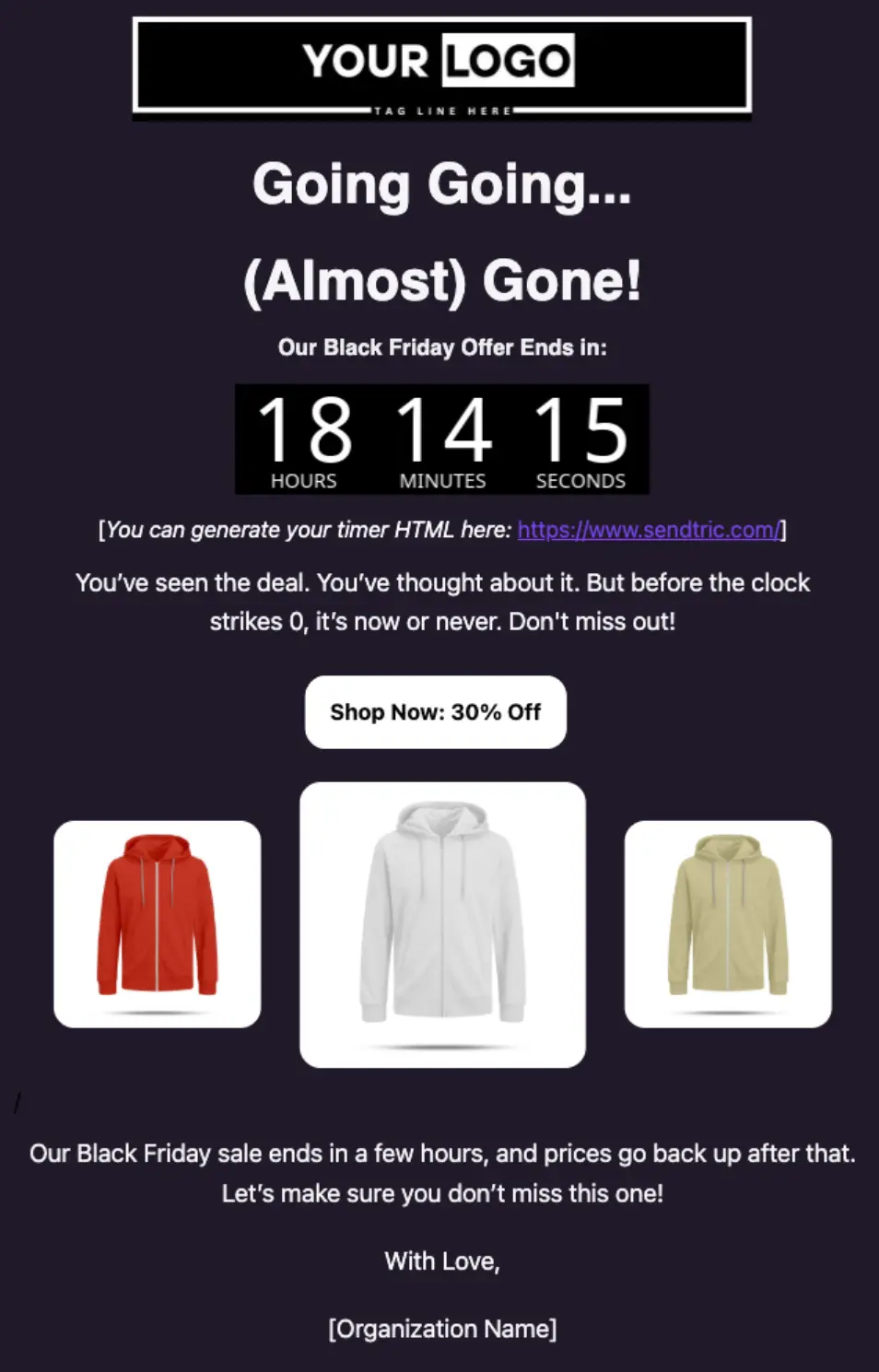
Avoid fake scarcity, such as timers that reset or “only 2 left” labels that never change. Shoppers notice, and it costs you the trust you need for the next sale
9. Recover Abandoned Carts
Abandoned cart recovery is a goldmine for boosting sales, and it’s easier than you might think.
Some of your Black Friday shoppers will add products to their cart and then leave. This happens often when they’re comparing prices, waiting for payday or just got distracted.
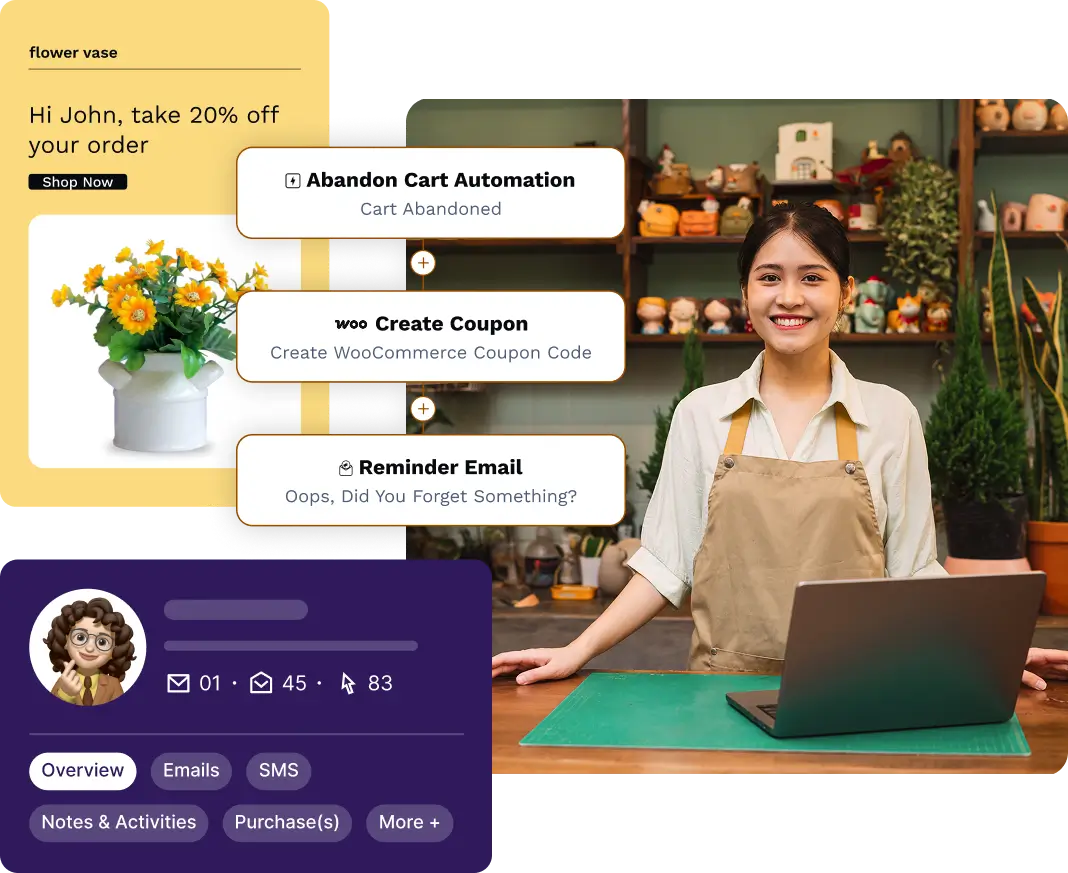
A short abandoned cart sequence brings a share of them back, usually with a first reminder within an hour or two, a second reminder the next day that answers common objections, and an optional final nudge before the deal ends. During the sale itself, you rarely need to add an extra discount to the reminder, because the Black Friday price is already the incentive.
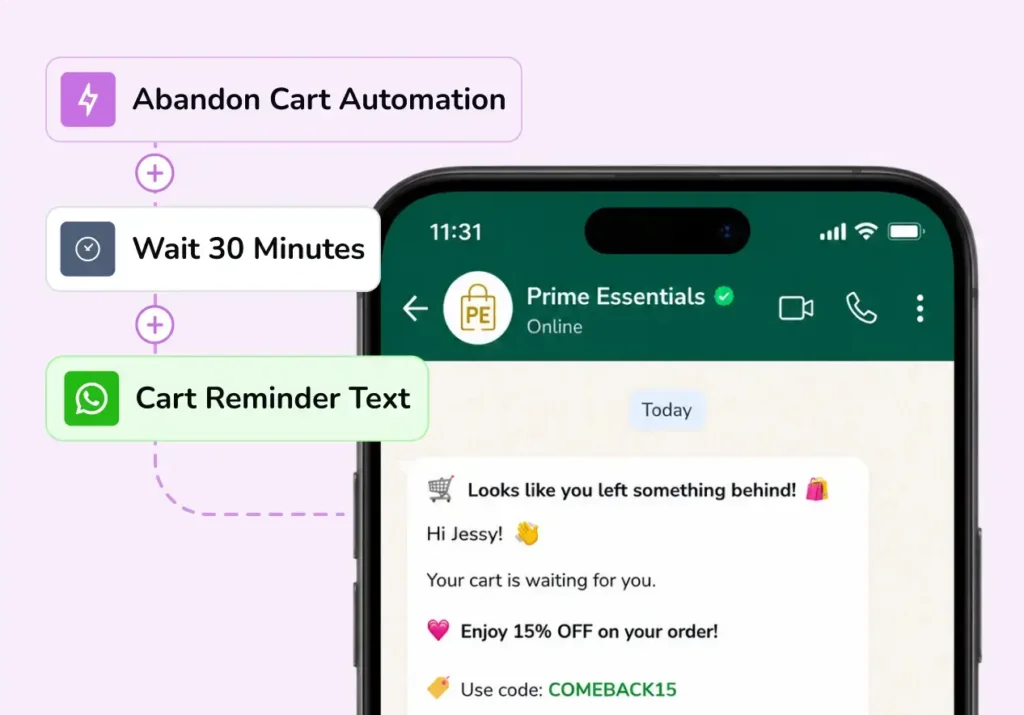
Remind the shopper what they left behind and when the deal closes. For more ideas on timing and copy, read our abandoned cart recovery strategies, and to build the workflow, start from an abandoned cart automation template.
10. Retarget Warm Visitors on a Small Budget
Not every shopper will buy on their first visit. But does that mean you’ve lost them? Absolutely no!
Retargeting ads are a powerful way to bring those visitors back and turn them into buyers.
Here’s how it works: when someone visits your site but leaves without making a purchase, retargeting ads remind them of the products they viewed. These ads show up across their favorite websites, social media, or apps, keeping your brand and offers top of mind.
However, paid ads tend to get expensive during Black Friday week as large retailers bid up the same audiences, so put a small budget where it works hardest, on people who already know you. Retarget visitors who viewed a product or started checkout in the last 30 days, and show them the deal and its end date rather than a general brand message.
That audience is far smaller, and much warmer, than a cold audience. With well-placed retargeting ads, you can turn missed opportunities into successful sales. So, don’t give up on your customers from now on!
Closing and After the Sale
How you end the sale matters as much as how you start it, because the last few days decide whether your deadlines stay believable and whether new buyers ever come back. These two strategies cover Cyber Monday and the final call, and then the follow-up that turns a one-time discount buyer into a repeat customer.
11. Give Cyber Monday Its Own Angle, Then Close with a Firm Last Call
If Black Friday is the grand opening act, then Cyber Monday is the thrilling finale of your holiday sales event. Just as a concert’s excitement builds as the night goes on, keeping the buzz alive until Cyber Monday can turn a successful Black Friday into a sales powerhouse.
Cyber Monday is still one of the biggest shopping days of the year, with Adobe recording $14.25 billion in US online sales on Cyber Monday 2025, which made it the biggest online shopping day of the year. Give it its own reason to buy rather than resending your Black Friday email, such as a bonus gift, a featured product or a deal on a different category.
Then end the sale when you said you would, with a clear final email on the last day. Quietly extending the deal teaches your customers that deadlines don’t mean anything, which makes your next sale harder to run.
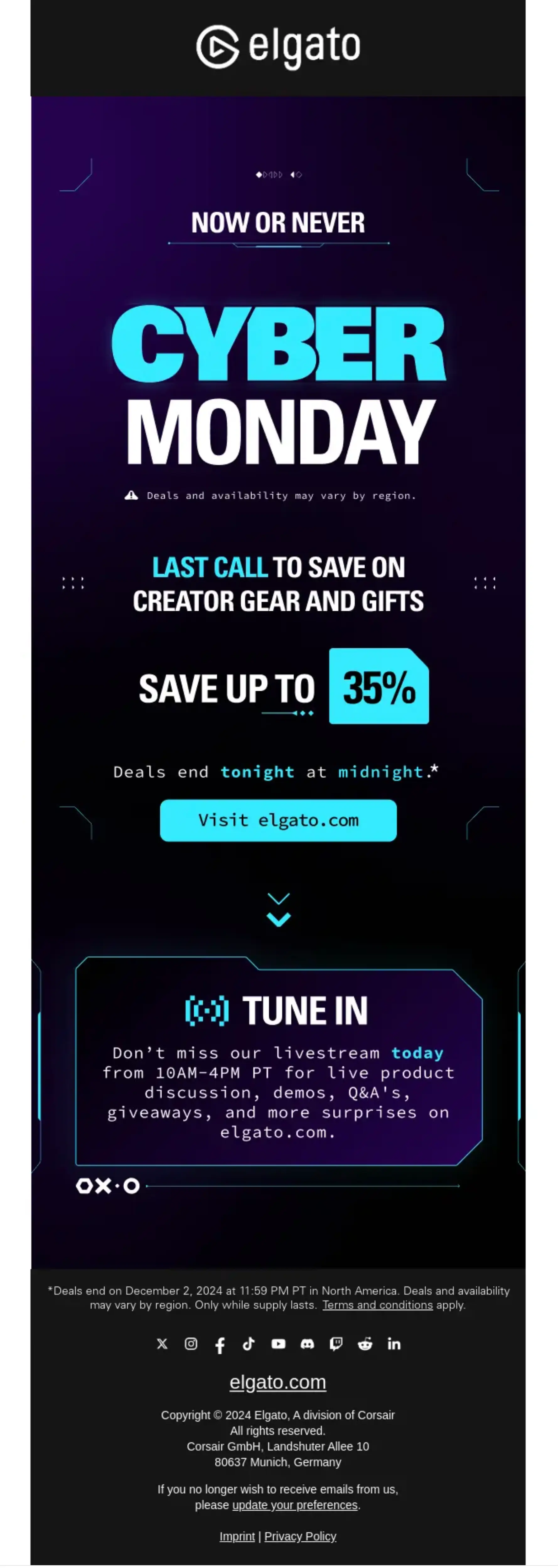
For example, Elgato’s neon, retro-gaming look and quick copy are aimed squarely at streamers and creators, which means the email reads as Elgato’s own rather than another generic sale announcement.
12. Turn New Buyers into Repeat Customers
The sale isn’t over when the deal ends. Klaviyo found that revenue from repeat buyers grew 13.6% over BFCM 2025, compared with 9% for new buyers, which shows how much of the season depends on customers coming back.
Send new Black Friday customers a thank-you email, help them get the most from what they bought, ask for a review once the product has arrived, and invite them to your next launch or loyalty offer. That follow-up turns a one-time discount buyer into someone who will buy again at full price.
Get the AI-powered email marketing and automation inside WordPress. Turn leads into customers, automate user journeys and grow repeat sales, with 45+ plugin integrations and no price hikes as you scale. Valid until December 4.
Black Friday Advertising Tips for Small Budgets
- Retarget first: Spend on people who visited your site or started checkout before you spend on cold audiences.
- Start before the auction gets crowded: Run awareness and list-building ads in early November, when costs are lower, and keep Black Friday week for retargeting.
- Show the offer and the deadline in the creative: People scrolling on their phone decide in a second, so the discount and end date should be visible without reading the caption.
- Send ads to a dedicated deal page: Landing on the homepage makes people look for the offer, and some of them won’t bother.
- Cap your daily spend: Set a ceiling based on the target from strategy 1, so one expensive day doesn’t eat your margin.
- Use partners alongside ads: Creators, affiliates and deal roundups can reach new buyers for a commission or a fixed fee instead of an open-ended ad budget.
Level Up Your Black Friday Game Plan
Black Friday is more than just a sale, it’s your chance to shine. By using smart, effective strategies, you can stand out, engage your audience, and maximize your sales.
From setting clear goals to extending the excitement through Cyber Monday, each tactic plays a part in creating a seamless, profitable experience for your customers. Remember, it’s not just about making quick sales but building long-term relationships that last beyond the holiday season.
So, are you ready to make this Black Friday your most successful one yet?
Apply these strategies, and watch your business thrive during the biggest shopping event of the year!
Frequently Asked Questions
Some common questions you might be looking for answers to:
Samira Farzana
Once set out on literary voyages, I now explore the complexities of content creation. What remains constant? A fascination with unraveling the “why” and “how,” and a knack for finding joy in quiet exploration, with a book as my guide- But when it’s not a book, it’s films and anime.
Table of Content
Related Articles and Topics
-

5 Best Design Tools in 2026 for Designers, Marketers, and Creative Teams
Every design tool wants to be the one app you never leave, and none of…
-
How to Drive More Engagement with WhatsApp Marketing Inside WordPress
You might be sending emails to your contacts regularly. It might be: All of them…




Leave a Reply